Home · Services · Emergency Board Up and Tarping
Emergency Board Up and Tarping in San Leandro, CA
Quick answer
Board-up for San Leandro homes, measured and anchored against East Bay hill wind, and documented as the first mitigation step in the claim.
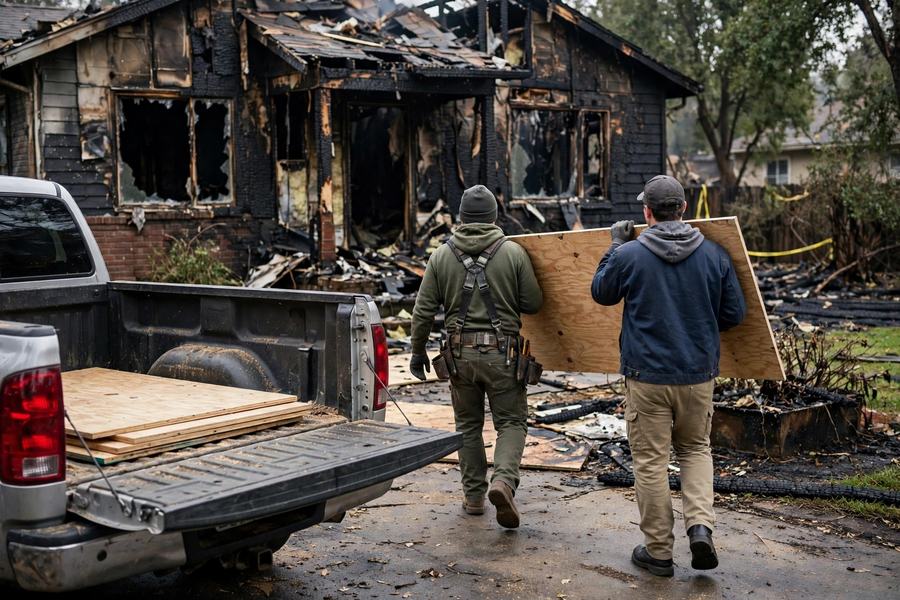
Board-up in San Leandro answers Bay weather as much as security: a burned opening admits damp marine air and the fog that rolls off the bay, and an unboarded house wets from the inside while the claim is still being opened. Openings are measured, covered, and anchored against the wind that runs down the East Bay Hills, and the board-up invoice is documented as the mitigation step insurers expect to see first.
Signs you need emergency board up and tarping
- Windows or doors were broken by the fire or by firefighters
- The roof has holes, missing sections, or fire damage
- The home will stand empty overnight or longer
- Rain is forecast before permanent repairs can start
What the job involves
What affects the price
- Number and size of openings to board
- Roof area to tarp and how steep or damaged it is
- Time of day and how quickly the crew must arrive
- Whether temporary fencing or locks are also needed
When it is an emergency
Board up is the one fire job that should never wait until tomorrow. Insurers expect the property to be protected from further damage, and an unsecured home after a fire is a known target. If the fire department has released the home, this call can be made the same night.
PLACEHOLDEREmergency Board Up and Tarping across the San Leandro area
Related services
Fire Damage Restoration
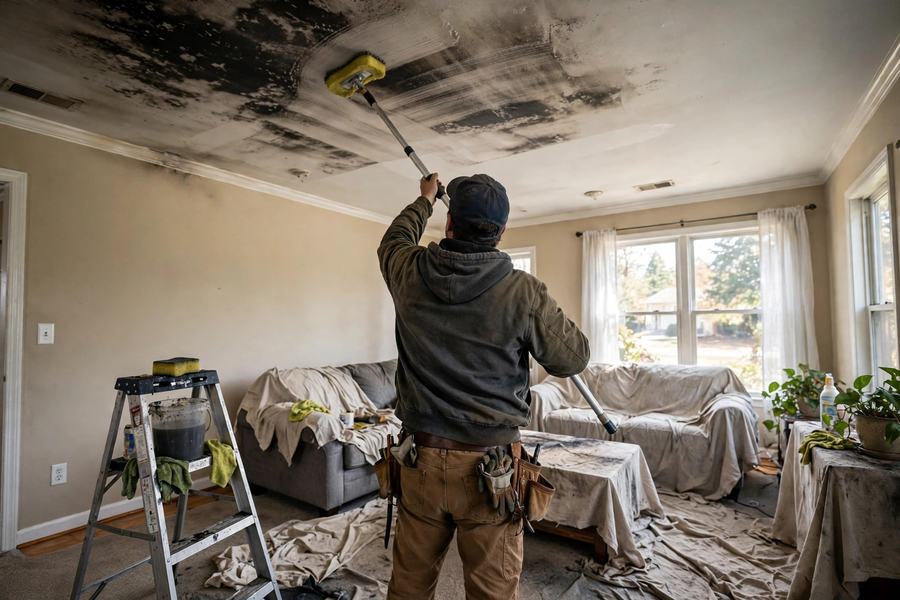
Restoration for San Leandro's two geographies: flatland ranch tracts with ordinary residential losses and hillside homes that take wildfire smoke on Diablo wind nights.
Commercial Fire Damage
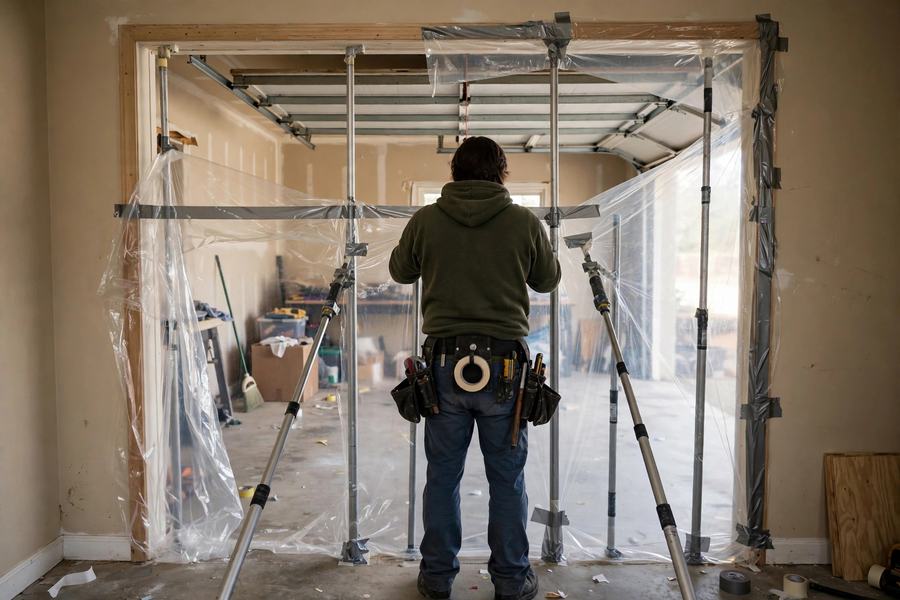
Commercial fire work for San Leandro's Davis Street corridor, the Marina, East 14th Street retail, and the industrial west side, phased around the marshal sequence.
Kitchen Fire Cleanup
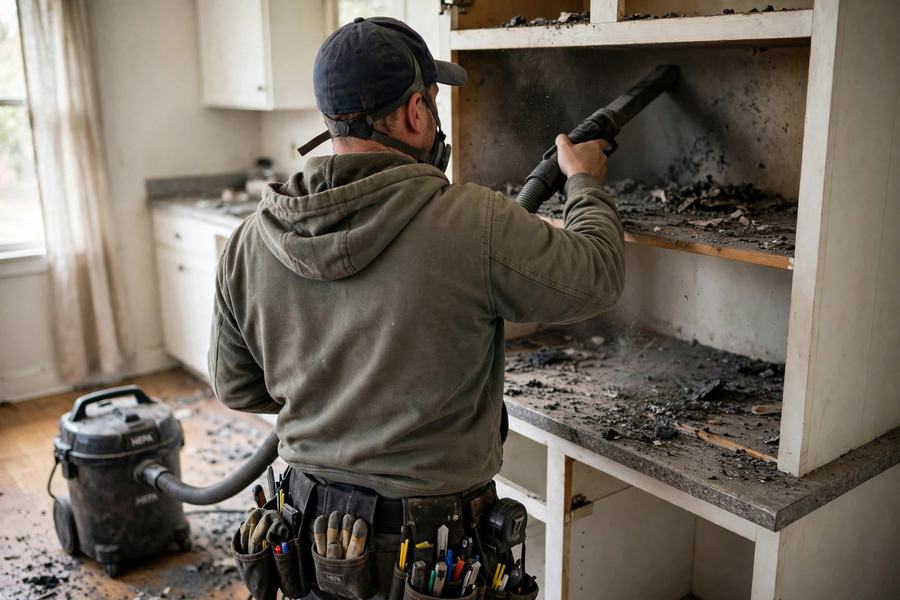
Kitchen fire cleanup for San Leandro's most common residential fire class, a migration scope across cabinets, ducts, and the rooms the furnace reached.
Electrical Fire Cleanup
Electrical fire cleanup in San Leandro, often starting at the panel or in the garage, with cleanup waiting on the electrical verdict.
Emergency Board Up and Tarping questions, answered
When is emergency board up and tarping an emergency?
Board up is the one fire job that should never wait until tomorrow. Insurers expect the property to be protected from further damage, and an unsecured home after a fire is a known target. If the fire department has released the home, this call can be made the same night.
What affects the price of emergency board up and tarping in San Leandro?
The main price factors for emergency board up and tarping are covered in the cost section above. The contractor confirms the exact price in a written estimate after seeing the job, and nothing is owed until you approve it. The call and the referral are free.
Can I stay in my home after a fire?
If the fire department or your insurer's assessment says the home is unsafe or uninhabitable, no, and loss of use coverage may pay for a hotel or rental in the meantime. For a contained fire (a kitchen fire with smoke through the house, for example) staying is sometimes possible after the assessment, but smoke residue is a respiratory irritant, the HVAC should stay off until ducts are checked, and children, older adults, and anyone with asthma should be cautious. Ask the question directly at the assessment and get the answer in the scope notes.
How long does fire restoration take?
Smoke only losses typically take one to two weeks from first cleaning to odor treatment. A fire that damages structure runs to months: one or two rooms with structural work commonly take three to six weeks of active repair, and larger structural losses can run three to nine months including permits and inspections. The variables are the scope the insurer approves, material lead times, and inspection scheduling. A contractor should give you a phase timeline in writing, not a single date promised on the phone.
Can I clean soot and smoke damage myself?
For a very light smoke film in one room, careful cleaning is possible, but two warnings matter. First, never wet wipe soot before dry lifting it: water and household cleaners smear soot and can set stains into paint permanently. Second, protein smoke from a kitchen fire and soot inside ducts, cabinets, and wall cavities are beyond household tools, and acidic soot left sitting etches metals and finishes within days. If the smell or film reaches more than the room that burned, a professional assessment is the safer call.
Request a callback
Prefer to talk later? Leave your details and an independent local pro will call you back. No charge to you, no obligation.
Lake Chabot Fire Restoration is a free referral service. Submitting this form connects you with independent local contractors who provide the work.